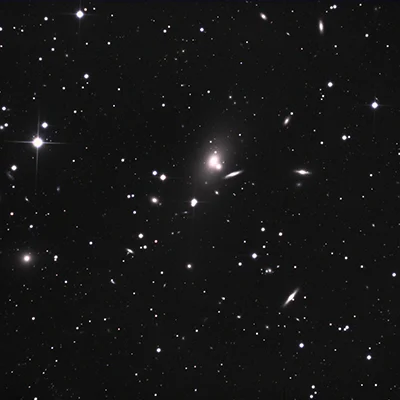
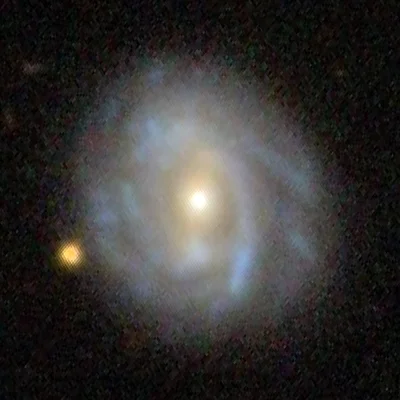
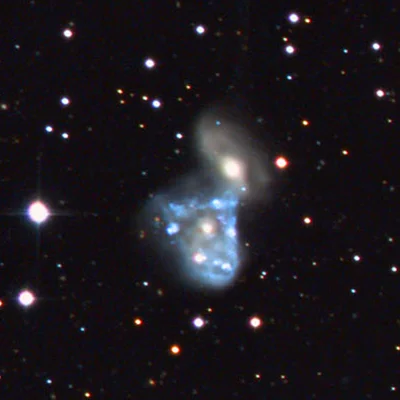
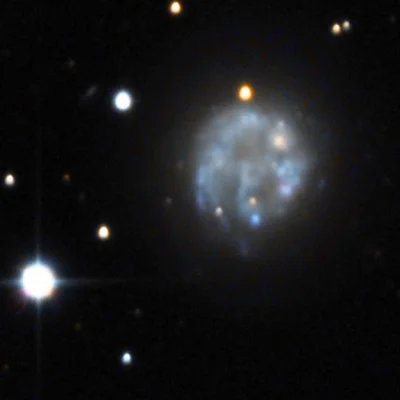
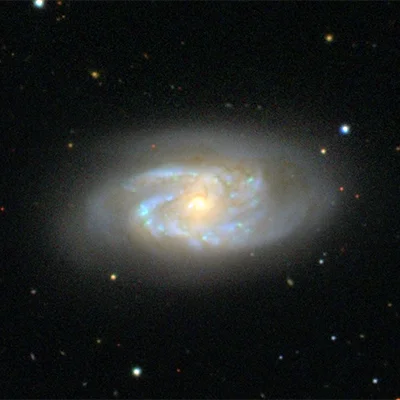
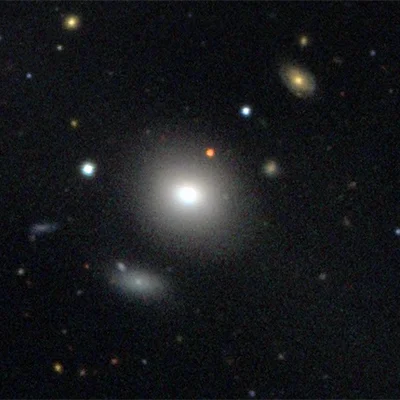
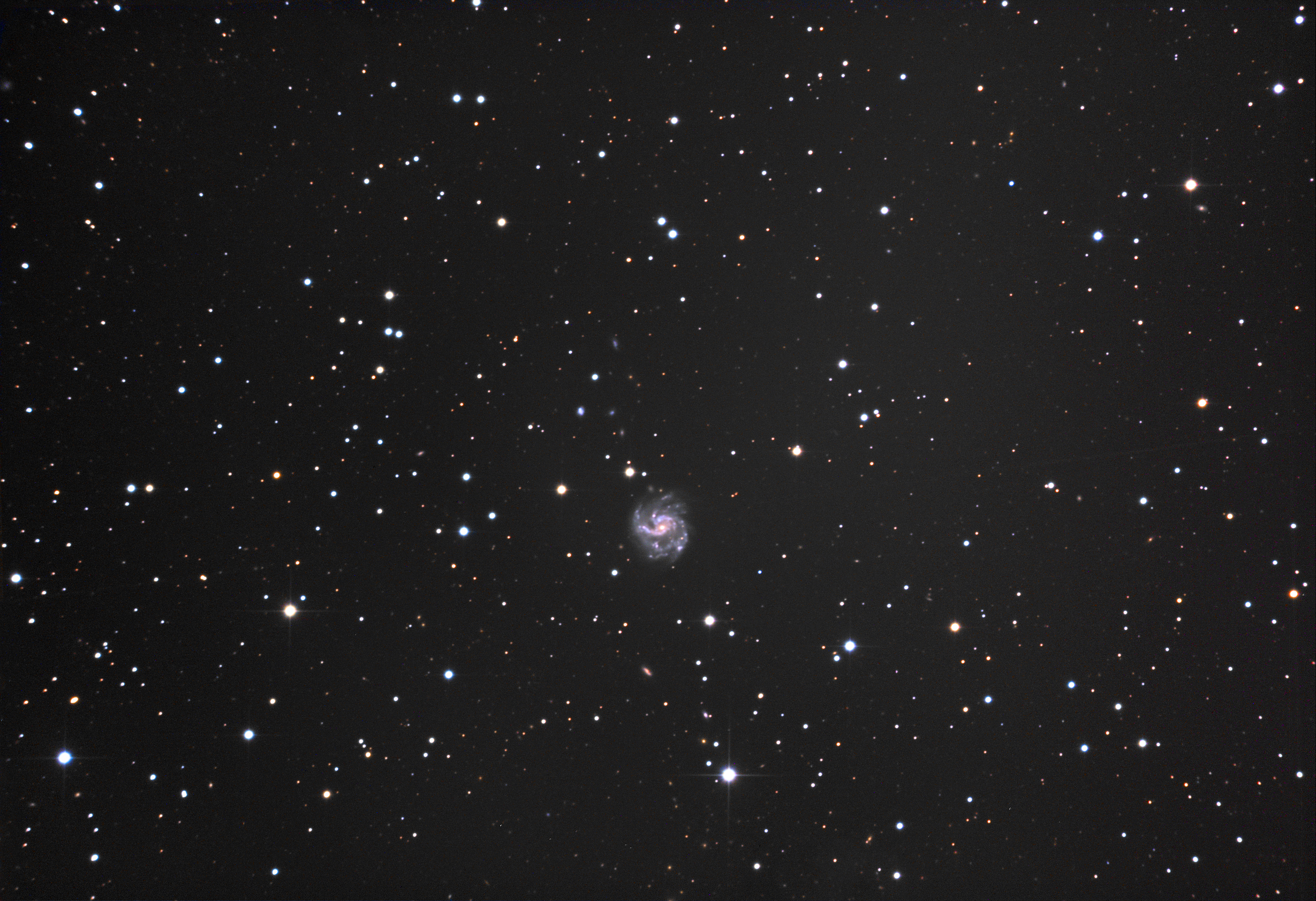
Galaxy NGC 2532
History
While looking through his 18.7 inch reflecting telescope William Herschel found on 5 February 1788 a «faint nebula» that he listed as II 726 and noted: «Pretty faint, pretty large, irregularly round, little brighter in the middle, resolvable, south of two stars parallel.» [464] John Herschel observed this galaxy twice, first on 22 January 1827 (sweep 51), and listed it as h 489. [466]
At Birr Castle the assistants of Lord Rosse observed the galaxy 10 times using the huge 72-inch reflector «Leviathan». Notes from 14 February 1857: «Certainly a star in centre or nuceus, and nearby projecting to south preceding side, but extremely faint.» Notes from 10 March 1858: «(Definition very good.) Nucleus stellar; the brightest part of the nebula looks resolvable. It is pretty large and mottled; suspected spriral.» [486]
Physical Properties
| Designation | NGC 2532 |
| Type | Gx (SBc) |
| Right Ascension (J2000.0) | 08h 10m 15.2s |
| Declination (J2000.0) | +33° 57' 22" |
| Diameter | 1.9 × 1.4 arcmin |
| Photographic (blue) magnitude | 13.0 mag |
| Visual magnitude | 12.4 mag |
| Surface brightness | 13.8 mag·arcmin-2 |
| Position Angle | 10° |
| Redshift (z) | 0.017519 |
| Distance derived from z | 74.00 Mpc |
| Dreyer Description | pB, pL, R, vglbM, r, 2 st nf |
| Identification, Remarks | WH II 726; h 489; GC 1626; UGC 4256; MCG 6-18-13; CGCG 178-32; IRAS 08070+3406; KARA 232; KUG 0807+341 |
Finder Chart
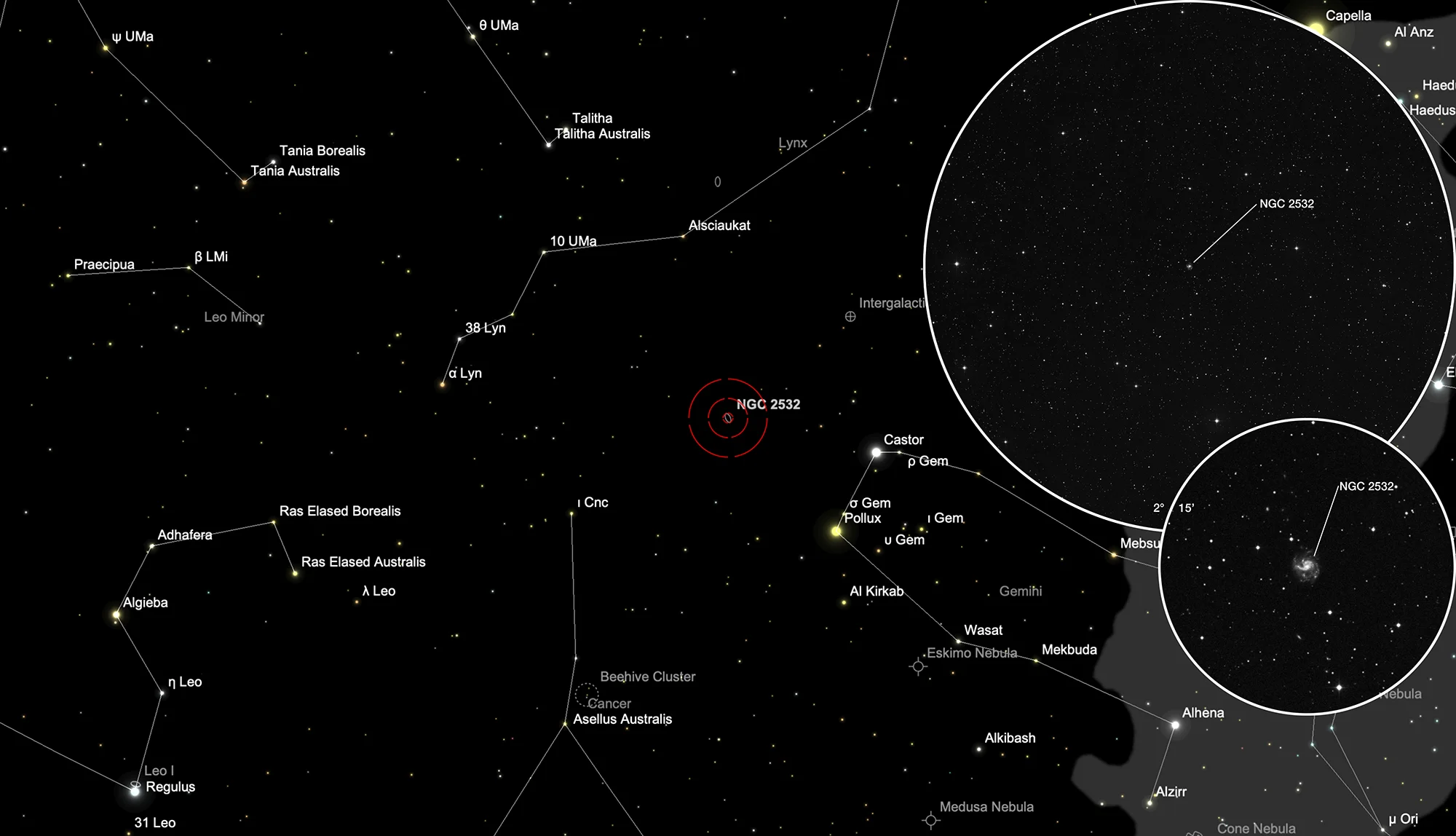
The galaxy NGC 2532 is located in constellation Lynx. On 21 January it in opposition with the Sun and is therefore highest in the sky at local midnight.