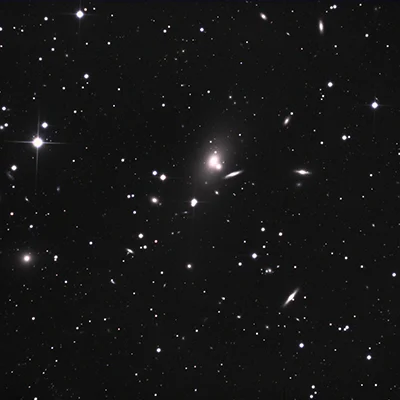
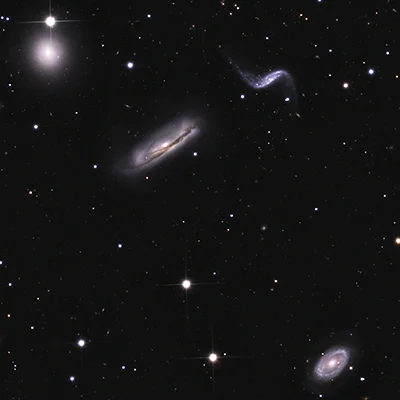
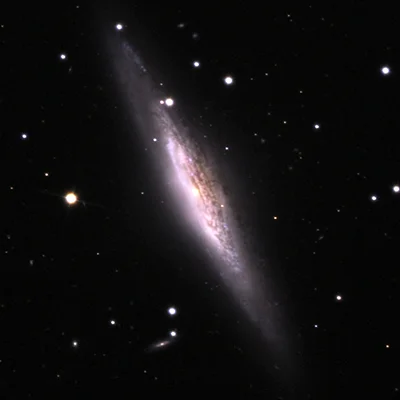
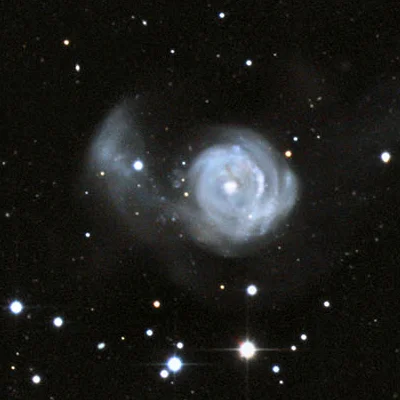
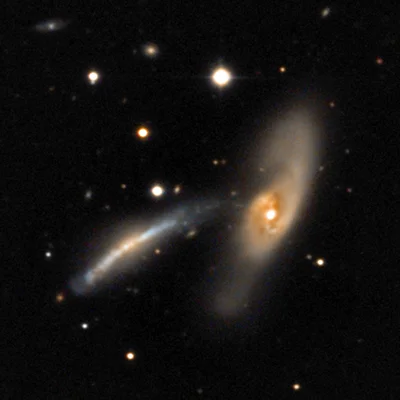
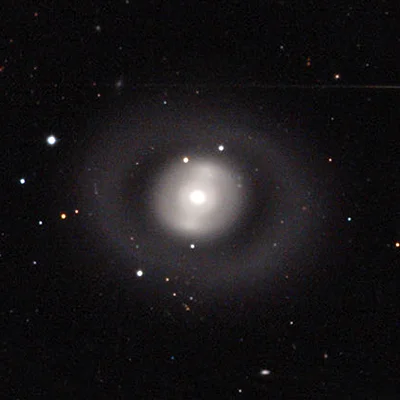
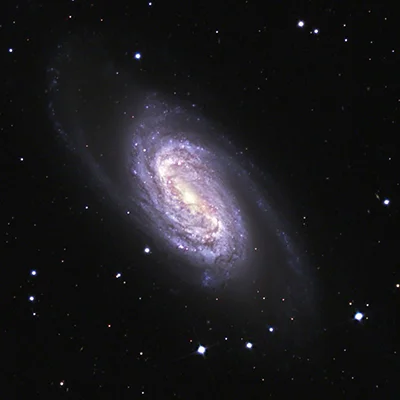
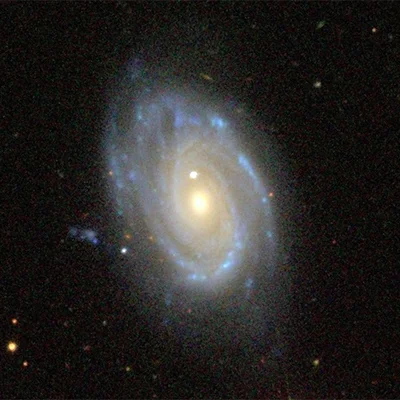
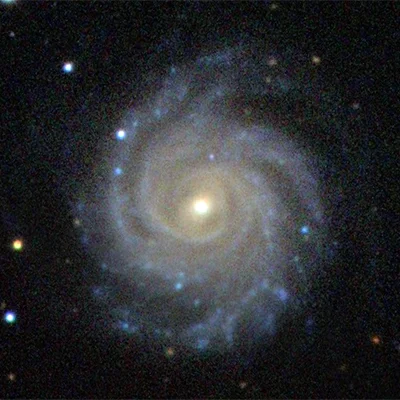
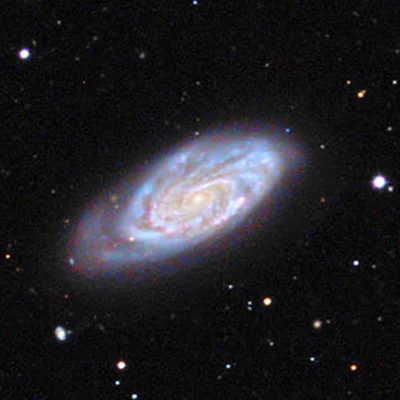
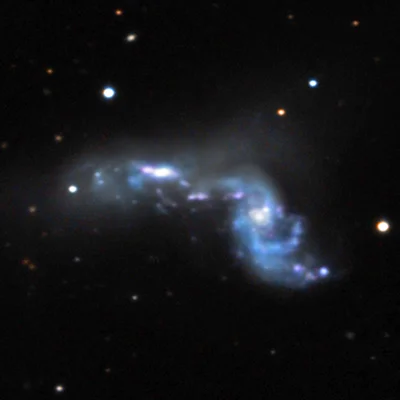
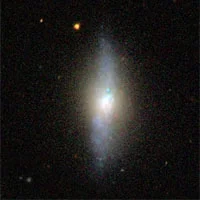
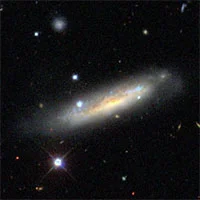
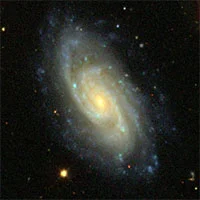
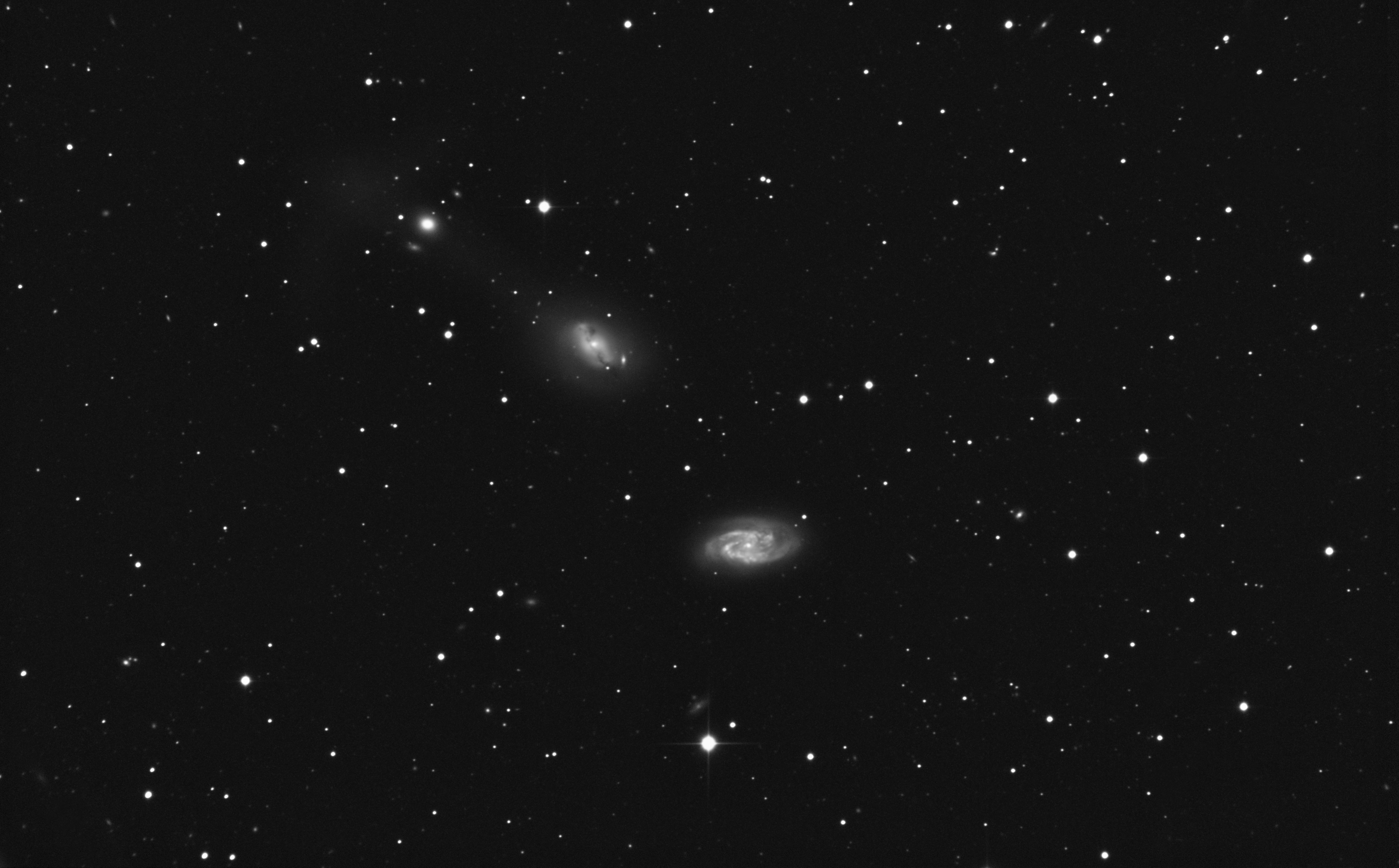
Galaxies NGC 2964, NGC 2968, NGC 2970
History
The galaxies NGC 2964 and NGC 2968 were discovered by William Herschel on 7 December 1785. He listed NGC 2964 as «bright nebula» I 114 and noted: «Considerably bright, considerably large, irregular figure, much brighter in the middle.» NGC 2968 was listed as «faint nebula» II 491 with the notes: «Pretty bright, pretty large, irregular figure, little brighter in the middle.» [464]
John Herschel listed NGC 2964 (I 114) as h 622, NGC 2968 (II 491) as h 624 and observed them first on 17 February 1827 (sweep 56) and noted: «Bright; elliptical; gradually brighter in the middle; 60"; The south preceding of two» and «pretty bright; round; gradually brighter in the middle; 30".» On 6 March 1828 (sweep 128) he discovered NGC 2970 and listed it as h 627 with the notes: «Faint, the following and most northern of 3.» He observed the group total four times. [466]
At Birr Castle the galaxy group was observed eight times using Lord Rosse's «Leviathan» with 6 feet aperture and 72 feet focal length. On 1 February 1856 it was noted: «h 622 has nucleus, and is much extended; its light is very unequal, and I suspect one dark lane running throughout its length; south of nucleus.» [486]
Physical Properties
| Name | RA | Dec | Type | bMag | vMag | B-V | SB | Dim | PA | z | D(z) | MD | Dreyer Description | Identification, Remarks |
|---|---|---|---|---|---|---|---|---|---|---|---|---|---|---|
| NGC 2964 | 09 42 54.1 | +31 50 49 | Gx (SBbc) | 12.0 | 11.3 | 0.7 | 12.8 | 3 × 1.7 | 97 | 0.004430 | 18.71 | 20.660 | B, vL, lE, vgbM, sp of 3 | WH I 114; h 622; GC 1896; UGC 5183; MCG 5-23-27; CGCG 152-56; IRAS 09399+3204; KUG 0939+320; KCPG 210A |
| NGC 2968 | 09 43 11.9 | +31 55 43 | Gx (Sa) | 12.8 | 11.9 | 0.9 | 13.1 | 2.1 × 1.6 | 45 | 0.005224 | 22.07 | 25.900 | pB, pL, lE, vglbM, 2nd of 3 | WH II 491; h 624; GC 1899; UGC 5190; MCG 5-23-29; CGCG 152-58; KCPG 210B |
| NGC 2970 | 09 43 31.0 | +31 58 39 | Gx (E1) | 14.4 | 13.6 | 0.8 | 12.4 | 0.4 × 0.3 | 54 | 0.005397 | 22.80 | 26.700 | F, nf of 3 | h 627; GC 1901; MCG 5-23-30; MK 405; CGCG 152-59; KUG 0940+322; NPM1G +32.0218 |
Finder Chart
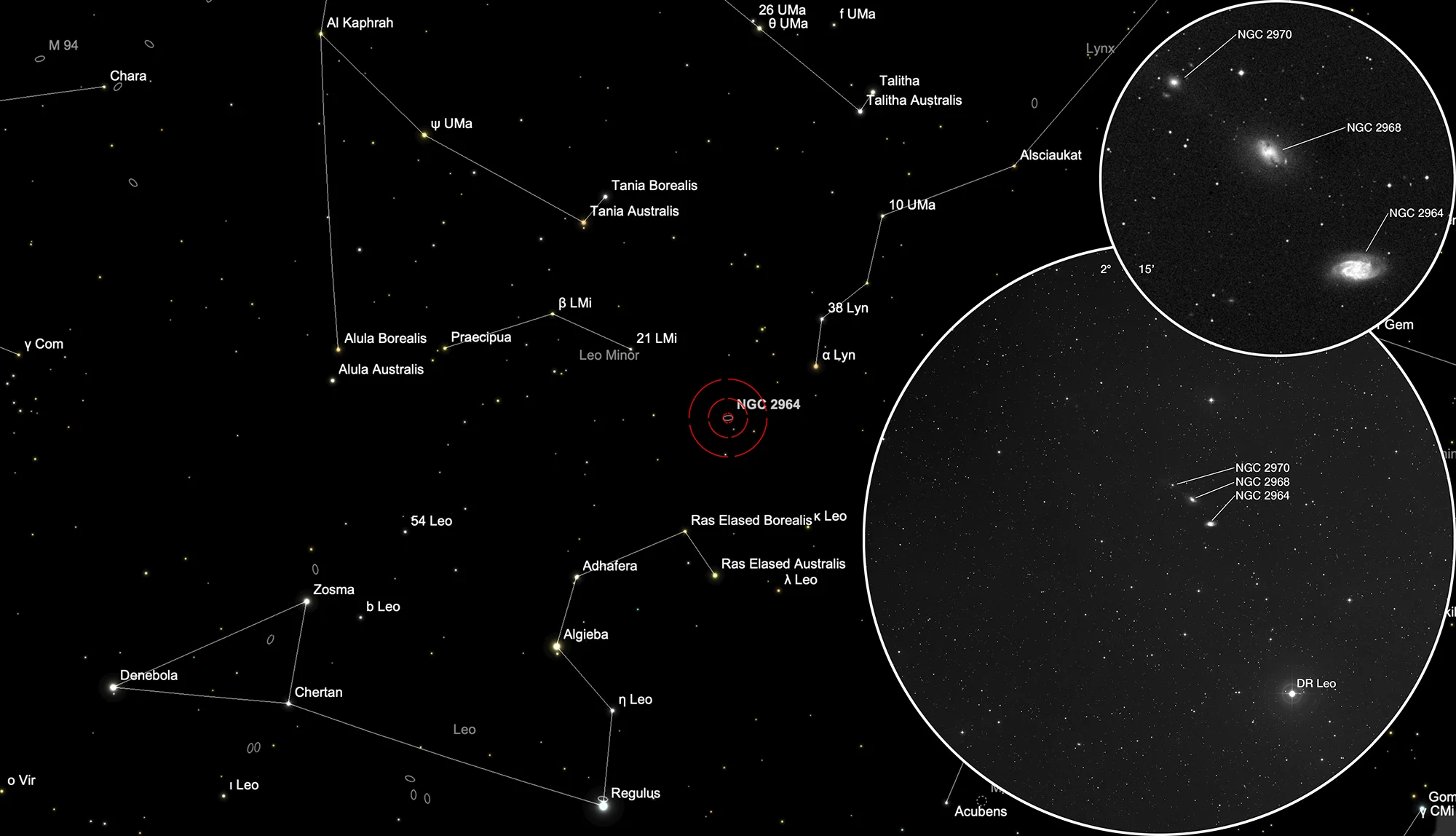
These galaxies are located in the constellation Leo, close to Leo Minor. On 13 February they are in opposition to the Sun and therefore cross the meridian at local midnight.