Pair of Galaxies NGC 1160/1161 + Cluster NGC 1193

Pair of Galaxies NGC 1160/1161
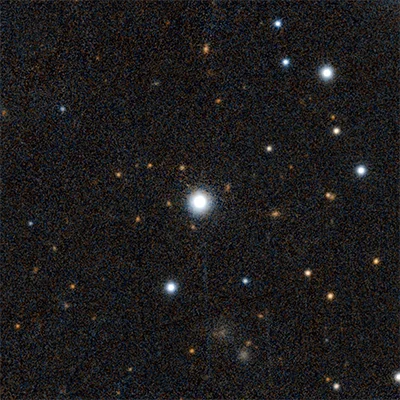
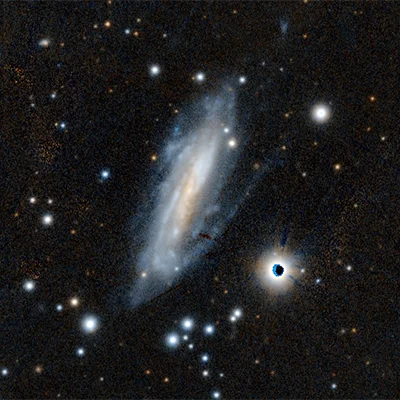
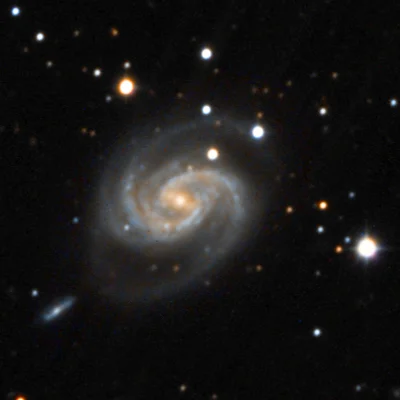
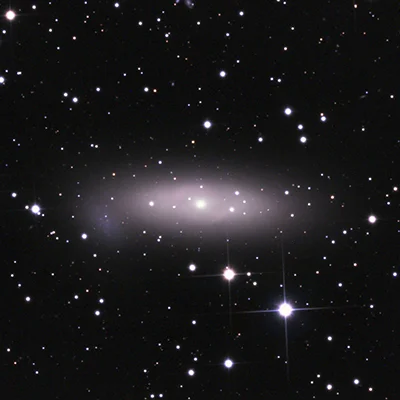
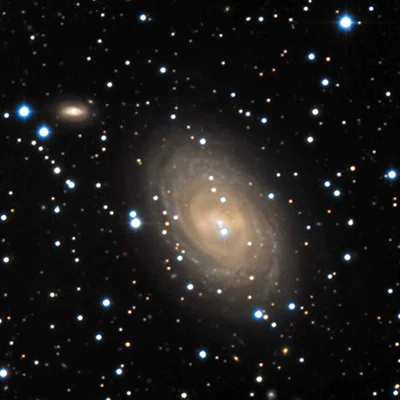
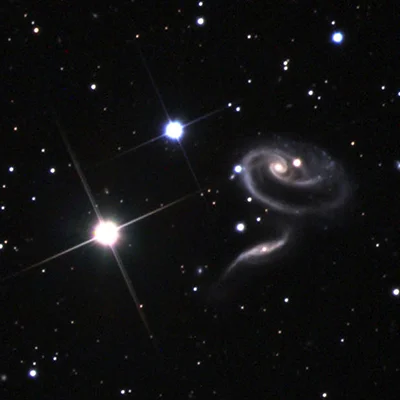
The galaxy pair NGC 1160/1161 was discovered by William Herschel on 7 October 1784. He listed them as II 239 and III 199. For II 239 (NGC 1161) he noted: «The first of two. Pretty bright, pretty small, resolvable.» For III 199 he noted: «The following of two. Very faint, irregular figure, pretty small II 239.» [463]
John Herschel observed NGC 1161 on 23 December 1831 (sweep 389) and listed it as h 277 with the notes: «Faint, round, gradually brighter in the middle; 20"; follows the double star h 2167, 6.5s» [466] He wasn't sure if the observed object was his fathers II 239 and did not mention the smaller galaxy north of it.
At Birr Castle it was observed three times with the 72-inch «Leviathan» reflecting telescope of Lord Rosse. The notes from 9 December 1857 read: «Pretty bright; oval; has a bright central nucleus; about 4' north is a faint extended nebula containing stars.» [486]
The brighter, larger lenticular Galaxy NGC 1161 shows an active nucleus and a redshift value of z ≈ 0.006, while the smaller barred spiral galaxys NGC 1161 shows a slightly larger z ≈ 0.008 and appears to be a bit further away. Together they form the galaxy pair KPG 86 (KPG = Karachentsev Pair of Galaxies).
| Name | RA | Dec | Type | bMag | vMag | B-V | SB | Dim | PA | z | D(z) | MD | Dreyer Description | Identification, Remarks |
|---|---|---|---|---|---|---|---|---|---|---|---|---|---|---|
| NGC 1160 | 03 01 13.2 | +44 57 20 | Gx (Scd) | 13.5 | 12.8 | 0.7 | 13.3 | 1.5 × 0.7 | 50 | 0.008432 | 35.62 | 24.300 | F, E | WH III 199; GC 629; UGC 2475; MCG 7-7-14; CGCG 540-27; KCPG 86A; IRAS 02579+4445 |
| NGC 1161 | 03 01 14.1 | +44 53 51 | Gx (S0) | 12.1 | 11.0 | 1.1 | 12.7 | 2.8 × 2 | 23 | 0.006518 | 27.53 | F, pS, lE, sbM | WH II 239; h 277; GC 628=634; UGC 2474; MCG 7-7-15; CGCG 540-26; KCPG 86B; IRAS 02579+4442 |
Open Cluster NGC 1193
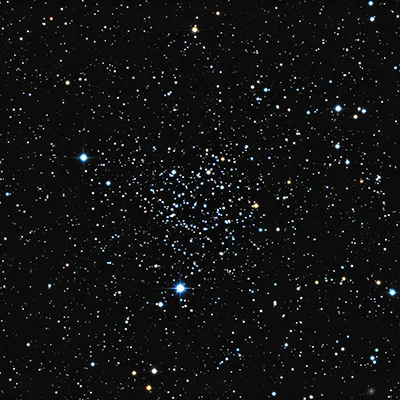
The open cluster NGC 1193 was discovered two years after NGC 1160/1161 on 24 October 1786 and William Herschel recorded it as II 608 with the notes: «Faint, considerably large, easily resolvable, some stars visible.» [464]
| Designation | NGC 1193 |
| Type | OCL (II3m) |
| Right Ascension (J2000.0) | 03h 05m 55.0s |
| Declination (J2000.0) | +44° 23' 00" |
| Diameter | 3 arcmin |
| Visual magnitude | 12.6 mag |
| Metric Distance | 4.300 kpc |
| Dreyer Description | F, cL, er |
| Identification, Remarks | WH II 608; GC 641; OCL 390 |
Finder Chart
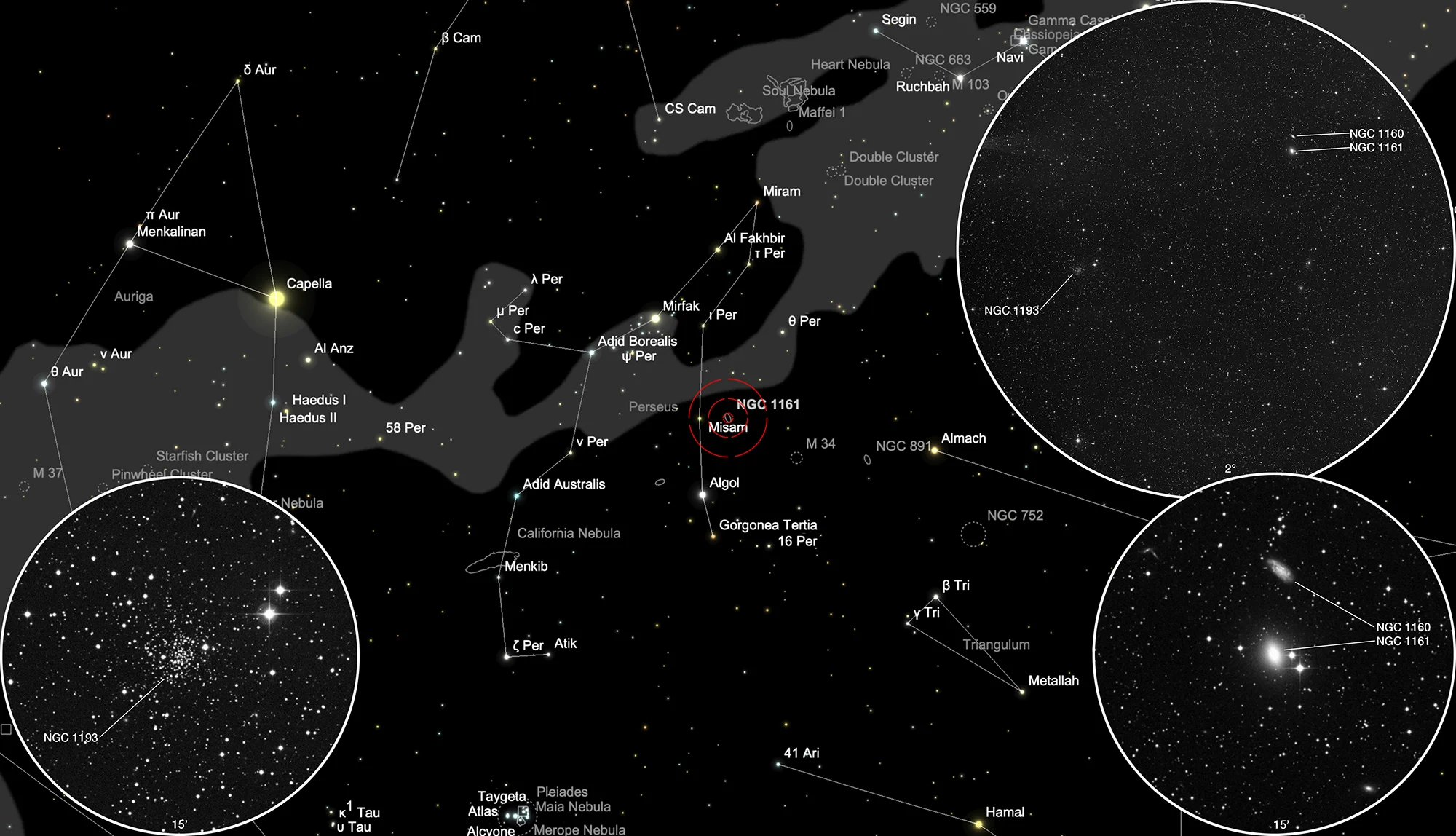
The galaxy pair NGC 1160/1161 is located in constellation Perseus. The best time for this is around 10 November when it is in opposition with the Sun and crosses the meridian at local midnight.