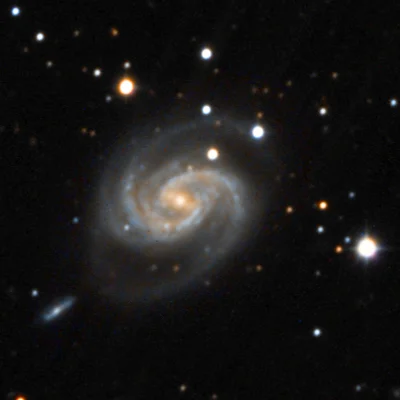
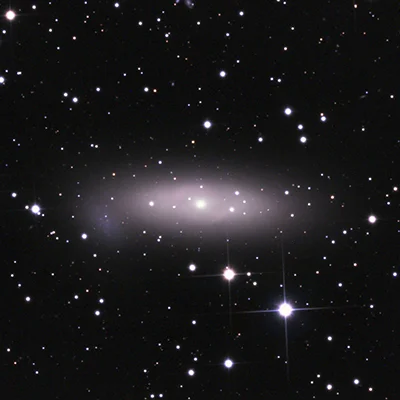
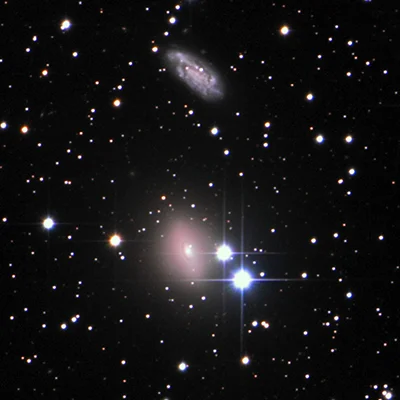
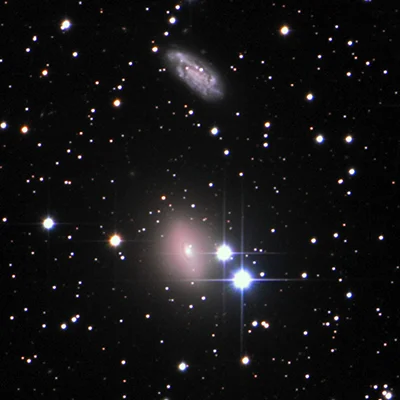
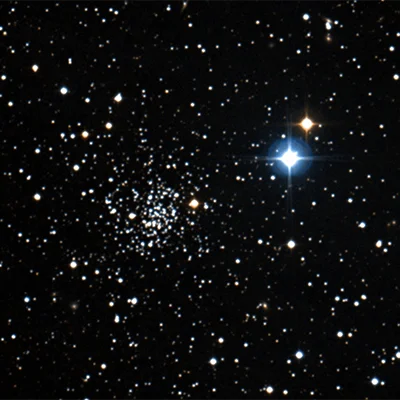
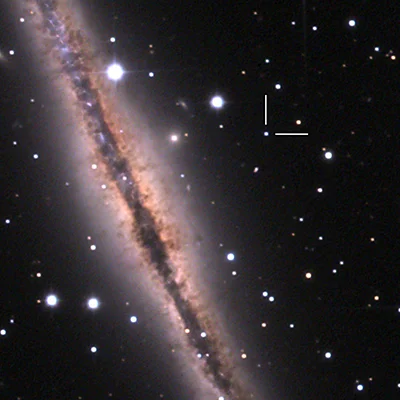
Galaxy NGC 1169
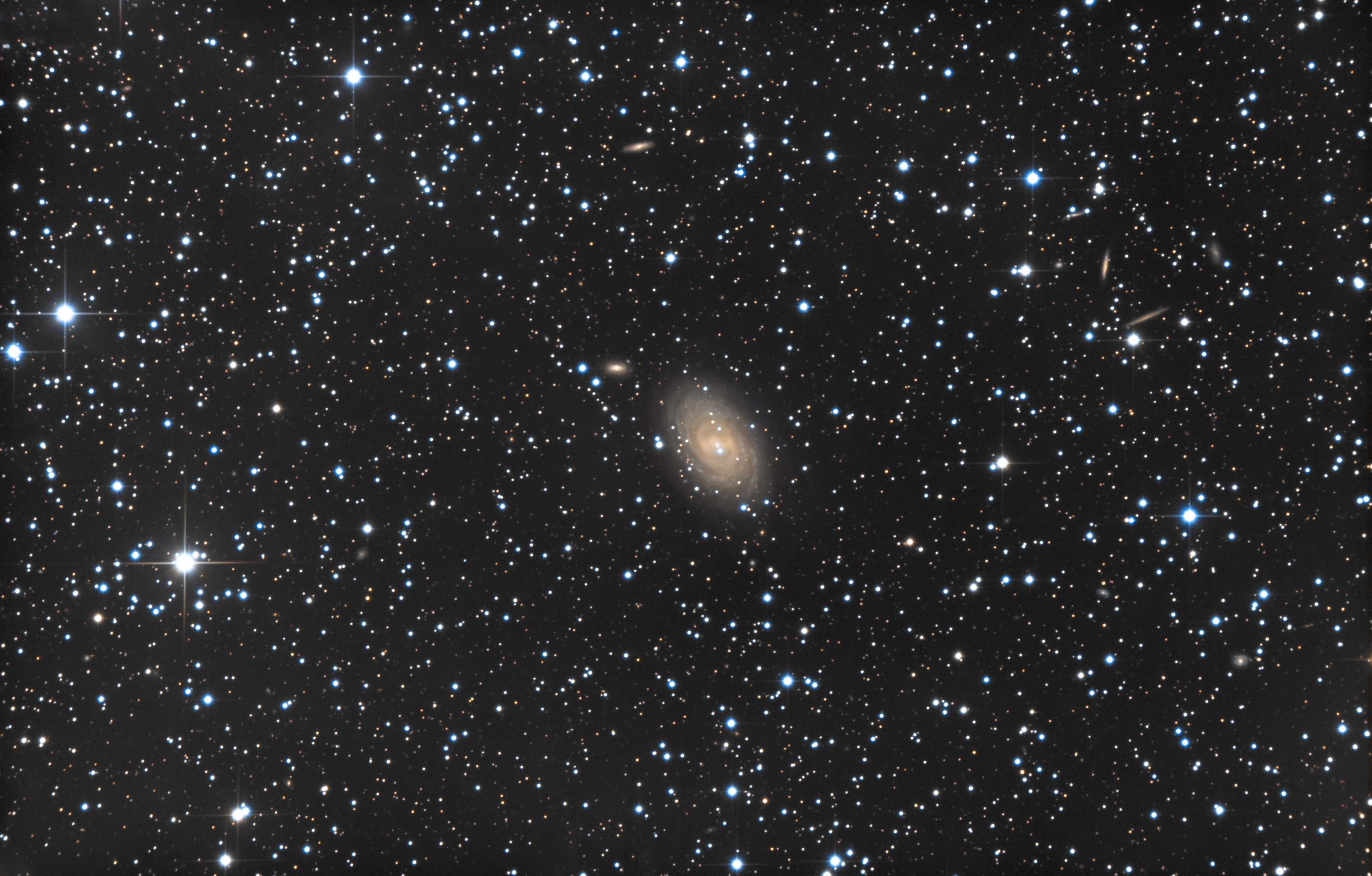
History
This galaxy was discovered by William Herschel on 11 December 1786. He listed it as «faint nebula» II 620 and noted: «Faint, small, irregularly round, brighter in the middle, large, stellar.» [464]
John Herschel observed it on 31 December 1831 (sweep 390) and listed it as h 279 with the notes: «Very faint; irregular figure. Suspected to be only a few stars.» [466]
At Birr Castle it was observed once with the 72-inch «Leviathan» reflecting telescope of Lord Rosse on 11 December 1854. The notes read: «Has a bright star south preceding the nucleus.» [486]
Physical Properties
| Designation | NGC 1169 |
| Type | Gx (SBb) |
| Right Ascension (J2000.0) | 03h 03m 34.8s |
| Declination (J2000.0) | +46° 23' 11" |
| Diameter | 4 × 2.6 arcmin |
| Photographic (blue) magnitude | 12.2 mag |
| Visual magnitude | 11.3 mag |
| Surface brightness | 13.8 mag·arcmin-2 |
| Position Angle | 28° |
| Redshift (z) | 0.007962 |
| Distance derived from z | 33.63 Mpc |
| Metric Distance | 35.430 Mpc |
| Dreyer Description | pF, pS, iF, sbM |
| Identification, Remarks | WH II 620; h 279; GC 635; UGC 2503; MCG 8-6-25; CGCG 554-20 |
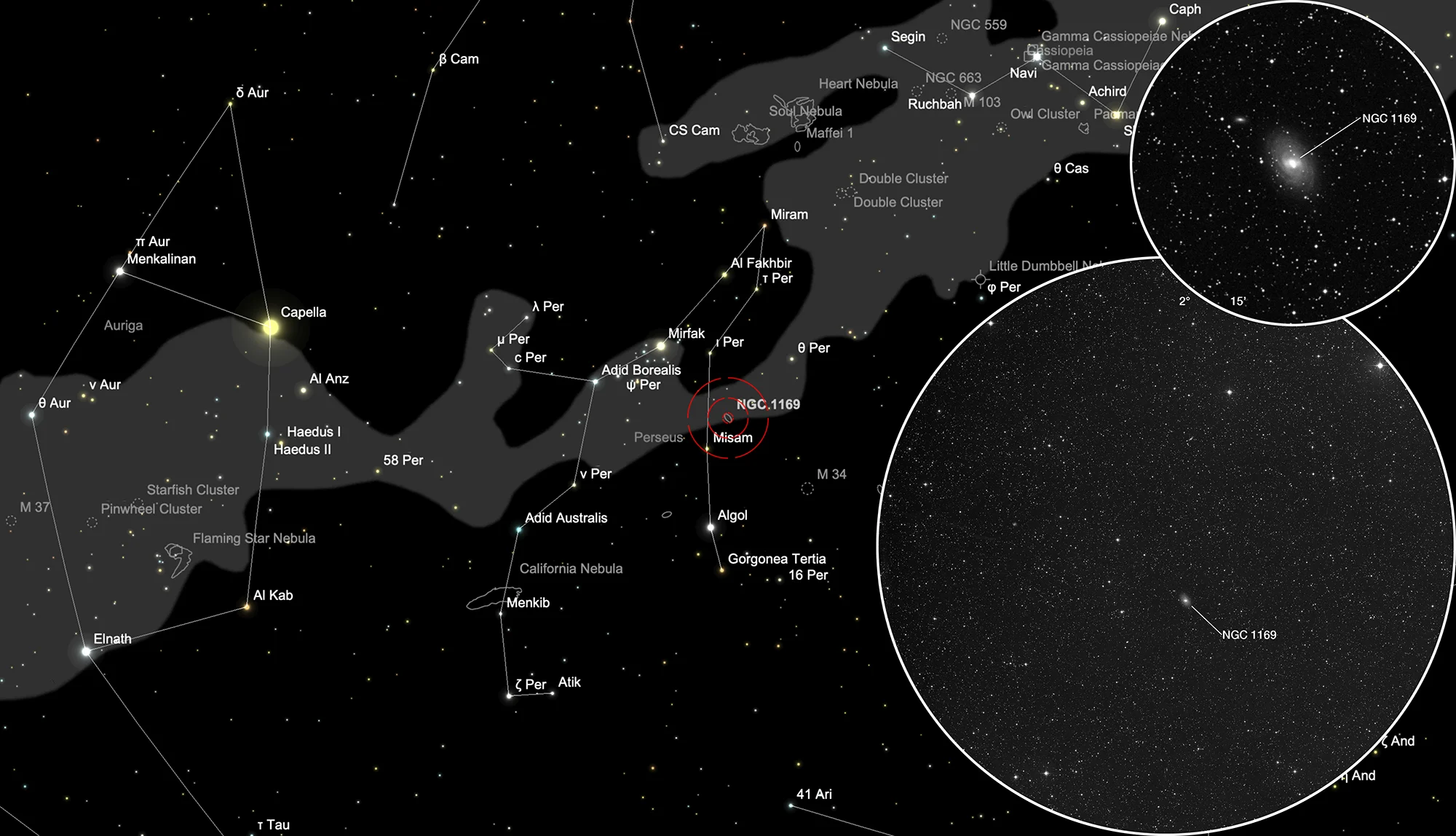
Finder Chart
The galaxy NGC 1169 is located in constellation Perseus. The best time for this is around 10 November when it is in opposition with the Sun and crosses the meridian at local midnight.